Scientific validation of ECG monitoring for recovery analysis
The Firstbeat Bodyguard 3 is a chest-worn ECG device designed for high-fidelity heart rate (RR interval) monitoring and heart rate variability (HRV) analysis. It uses a single-lead ECG sampled at 256 Hz with 1 ms RR-interval resolution, providing clinical-grade signal quality in both resting and active conditions. This ECG-based approach is considered a gold standard for HRV measurement, offering superior accuracy compared to optical (PPG) sensors which can be prone to motion artifacts and skin-related interference (Myllymäki, 2021). Unlike wrist-worn gadgets, Bodyguard 3’s accuracy is independent of skin pigment, temperature, or movement, ensuring reliable data during everyday activities and exercise. The device attaches with standard electrodes and has ample memory (up to 8+ days of continuous data) and battery life (~10 days) for long-term monitoring, making it well-suited to capture full 24-hour cycles of stress and recovery in real life.
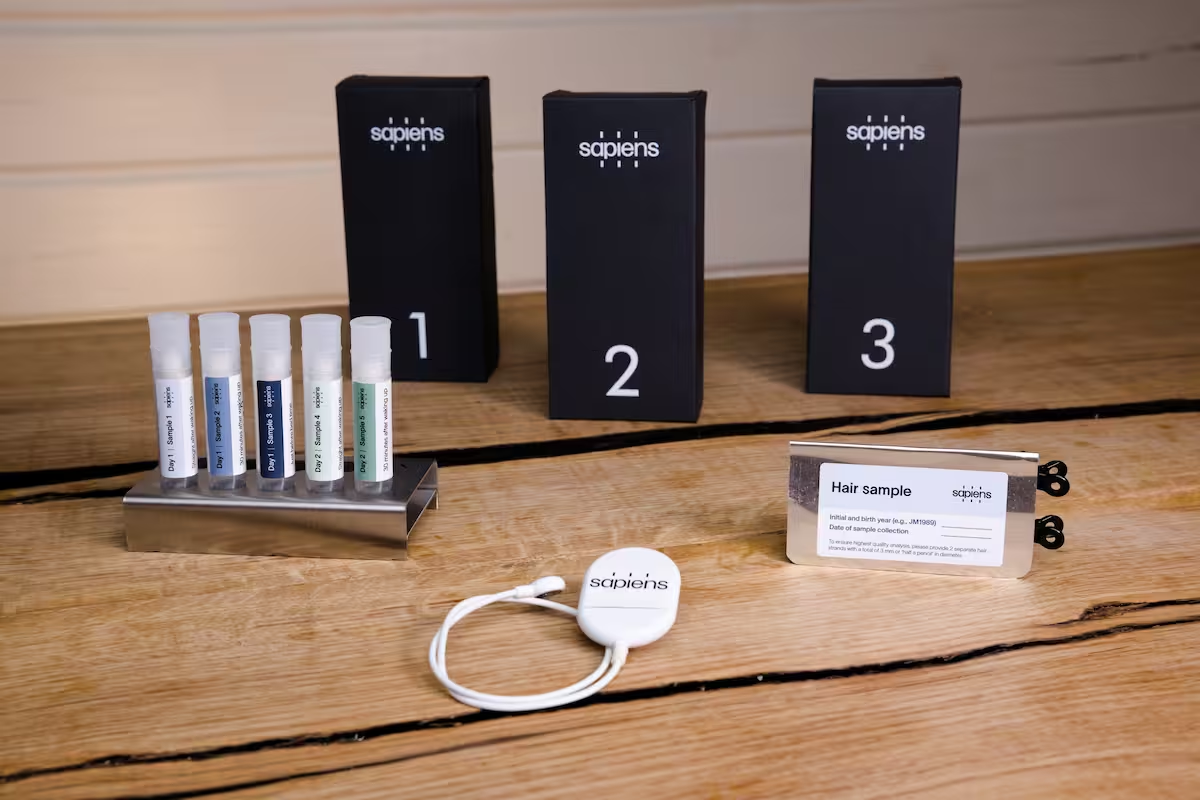
As part of the Sapiens diagnostics, the device is worn from Sunday to Saturday in order to capture recovery patterns of an entire workweek as well as one weekend night (Sunday to Monday) for reference of the differences in recovery capacity.
Analytical Specificity
“Analytical specificity” here refers to the device’s ability to correctly identify true heartbeats and avoid false detections. The precursor model (Firstbeat Bodyguard 2) has been rigorously tested against reference clinical ECG, and its performance underscores the technology’s precision. In a validation study with healthy adults performing various activities, Bodyguard 2 detected 99.95% of all heartbeats (only 0.05% missed) and had a false-detection rate of just 0.16% . The mean absolute error in RR interval was only ~2.96 ms (~0.5%), indicating virtually identical beat-to-beat timing compared to a hospital-grade ECG (Parak & Korhonen, 2013).After applying Firstbeat’s artifact correction algorithms, the error rates dropped even further (missed beats ~0.02%, false detections ~0.04%) . This demonstrates an extremely high specificity in signal acquisition – the device almost never registers a heartbeat that isn’t truly there. Such high-fidelity beat detection is critical because even small errors can distort HRV metrics. The accuracy holds up during physical exercise as well; the validation included walking, running, and cycling, showing the device maintained precision under motion . In summary, Bodyguard devices provide ECG-trace quality data and reliably isolate true cardiac beats from noise or artifact. This level of analytical specificity meets the requirements for medical-grade monitoring and ensures confidence that the HRV data reflects genuine physiological events rather than sensor error.
Analytical Sensitivity
Analytical sensitivity refers to the device’s ability to capture subtle changes or small physiological events in the heart rhythm. The ECG-based measurement of Firstbeat Life allows for detection of even brief autonomic reactions. Notably, an update to the Firstbeat analytics in 2021 improved the temporal sensitivity of stress/recovery detection from a 30-second resolution to just a few seconds – meaning the system can now identify very short bursts of recovery or stress that earlier might have gone unnoticed (Myllymäki, 2021) – https://www.firstbeat.com/en/blog/measure-your-stress-and-recovery-levels-more-accurately-updated-firstbeat-life-analytics-promote-health-and-well-being/. This heightened sensitivity is scientifically important: it enables capturing transient events such as a momentary relaxation (e.g., a calming breath) amidst stress or a brief spike of stress during an otherwise calm period. The Bodyguard 3’s millisecond accuracy in RR intervals provides a sensitive measure of HRV parameters like RMSSD (root-mean-square of successive differences), which respond to even minor autonomic changes. For example, in the aforementioned validation, the difference in the HRV metric RMSSD between the Bodyguard’s readings and the gold-standard ECG was only ~1.3 ms, underscoring that no meaningful variation was missed (Parak & Korhonen, 2013) – https://assets.firstbeat.com/firstbeat/uploads/2015/11/white_paper_bodyguard2_final.pdf. The device’s sensitivity is further illustrated by its ability to capture beat-to-beat variability during vigorous exercise, a situation where cheaper sensors often lose accuracy. Independent research comparing wearable HRV devices found that chest-based ECG monitors (like Firstbeat) maintain accuracy during high-intensity movement, whereas many wrist devices show reduced agreement with ECG as exercise intensity rises (Georgiou et al., 2018) – https://pubmed.ncbi.nlm.nih.gov/29602060/. In summary, the Firstbeat Bodyguard technology is sensitive enough to detect nearly all true beats and the fine-grained variability between them, providing a trustworthy foundation for downstream analyses of stress, recovery, and other physiological states.
Correlational & Associative Validity
A core aspect of validation is showing that the device’s measurements correlate with established physiological markers and meaningful health outcomes. Firstbeat’s analytics have been developed and tested to ensure that the HRV-derived stress and recovery metrics reflect real-world stress responses. One key validation study examined Firstbeat’s Relaxation-Stress Intensity (RSI) index – the proprietary metric quantifying stress vs. recovery – in parallel with the well-known Trier Social Stress Test (TSST) in both healthy individuals and those with cardiometabolic risk factors. The results demonstrated that RSI tracked the physiological stress response very closely: during the induced stress, subjects showed significant increases in heart rate and cortisol, and decreases in HRV, as expected. Importantly, the HRV-based RSI was the strongest predictor of the cortisol surge, outperforming even heart rate in reflecting the stress hormone response (Seipäjärvi et al., 2022) – https://doi.org/10.1088/1361-6579/ac6b7c. In other words, the Firstbeat stress index mirrored changes in cortisol – a gold-standard stress biomarker – indicating that the device is capturing the true activation of the stress pathway . Likewise, RSI had a meaningful correlation with participants’ perceived stress levels, though heart rate tended to parallel subjective feelings slightly more in that study . Together, these findings validate that Firstbeat’s measurements are not just numbers in isolation; they correspond to real physiological stress in the body and align with how people subjectively experience stress.
Beyond acute laboratory stressors, the device’s ability to reflect lifestyle and health factors has been supported by numerous studies. For example, a large real-world dataset from 4,098 Finnish employees showed that Firstbeat-measured recovery during sleep is highly sensitive to alcohol intake. In an observational study, nights following alcohol consumption showed a dose-dependent increase in sympathetic dominance and suppression of recovery as measured by HRV, compared to alcohol-free nights (Pietilä et al., 2018) – https://doi.org/10.2196/mental.9519. Remarkably, even young, physically fit individuals experienced significant reductions in overnight parasympathetic activity after drinking, indicating no one is “immune” to alcohol’s impact . This not only validates the device’s sensitivity to known physiological perturbations, but also highlights its usefulness in behavior change – as the authors note, wearable HRV tracking can vividly demonstrate the effect of alcohol on recovery to individuals (Pietilä et al., 2018) – https://doi.org/10.2196/mental.9519.
Another associative validation comes from the context of occupational burnout and mental well-being. In a study of school teachers, those with clinical burnout showed distinct autonomic patterns captured by Firstbeat: higher 24-hour heart rates, lower HRV, and fewer daily steps compared to non-burned-out colleagues (Pihlaja et al., 2022) – https://doi.org/10.3390/brainsci12121723. These physiological alterations correspond with their condition and cognitive fatigue, and the researchers concluded that wearable HRV devices can potentially serve as biomarkers for burnout, objectively flagging the strain on the autonomic nervous system . Similarly, in home care nurses, Firstbeat measurements showed that those with heavier physical workloads had reduced HRV and recovery both during work and off-duty hours, consistent with higher stress load spilling into leisure time (Mänttäri et al., 2023) – https://doi.org/10.1007/s00420-022-01889-7. These correlations between Firstbeat metrics and known stress-related outcomes (hormones, self-reports, clinical syndromes, etc.) establish a strong convergent validity: the device is measuring what it is intended to measure (stress, recovery, autonomic balance) in alignment with independent indicators.
Clinical Specificity
When considering “clinical specificity” in this context, we refer to the system’s ability to correctly identify or rule out clinically relevant events or states. One compelling example is the detection of paroxysmal atrial fibrillation (AF) – a common arrhythmia with significant health implications. The Bodyguard device (used as a 24-hour patch) was tested in a clinical trial for AF screening against simultaneous hospital ECG monitoring. The results were outstanding: the automated algorithm analyzing Bodyguard’s HRV data achieved a 100% sensitivity in identifying patients with AF (no false negatives) and about 95% specificity (very few false alarms) on a per-patient basis (Santala et al., 2022) – https://doi.org/10.2196/31230. In terms of accuracy, 97.2% of participants were correctly classified as AF or normal sinus rhythm . On a time-based analysis of the ECG recordings, the method was >98% accurate as well . This indicates that the device can capture arrhythmic events with near diagnostic precision, essentially matching a clinical Holter monitor for this purpose. Achieving such high specificity in a mixed patient population (the study included 178 emergency room patients with and without AF) validates that the ECG signal quality and analysis are robust enough for medical screening. It’s worth noting that 81.5% of the total recording hours were fully interpretable from the single-lead patch, with a median of 99% usable data per subject – reflecting reliability even in a real-world deployment on patients who are moving around. In short, the Bodyguard’s data is specific enough to distinguish abnormal cardiac rhythms and potentially other clinical conditions without excessive false positives, a crucial attribute for any medical monitoring tool.
Clinical Sensitivity
“Clinical sensitivity” refers to the ability to detect true positive cases or meaningful changes in a clinical scenario. We’ve already seen an example with AF detection (100% sensitivity in that study), but the device’s sensitivity extends to other clinical and physiological phenomena. For instance, the Firstbeat method’s sensitivity in detecting changes in sleep stages has been examined against the gold-standard of laboratory polysomnography (PSG). In a validation study of healthy young adults, the Firstbeat HRV-based sleep analysis showed excellent sensitivity (95%) for detecting wakefulness during the night, meaning it very rarely missed periods when the person was actually awake (Kuula & Pesonen, 2021). It was also quite sensitive to deep sleep (slow-wave sleep), correctly identifying around 72% of those epochs (with over 90% specificity, meaning few false detections of deep sleep) (Kuula, Pesonen, 2021). REM sleep is physiologically trickier to detect via cardiac signals, but the Firstbeat algorithm still achieved ~60% sensitivity for REM, which researchers deemed acceptable given the method’s focus on autonomic state changes . Importantly, the overall accuracy for classifying sleep vs wake was ~93%, and the amount of light and deep sleep detected did not differ significantly from PSG measurements (aside from a slight underestimation of REM duration by ~18 minutes) . These results demonstrate that Firstbeat’s sensitivity is high enough to capture the major changes in autonomic state associated with different sleep stages, an impressive feat for a wearable device. It detects the physiologically significant transitions (e.g., from light sleep to deep sleep or to wake) with a level of sensitivity that supports its use in sleep and recovery assessments.
Beyond specific use-cases, the breadth of research applications for Firstbeat underscores its sensitivity to various clinical and subclinical conditions. For example, the device has been used to monitor stress responses in chronic pain patients undergoing a mindfulness intervention, successfully recording HRV changes associated with pain relief techniques (Moreira et al., 2023) – https://doi.org/10.1016/j.jpain.2023.06.001. It has been sensitive enough to pick up physiological arousal in police officers during realistic training scenarios, correlating heart rate surges with stressful events (Di Nota et al., 2023) – https://doi.org/10.21203/rs.3.rs-2644401/v1. In an observational study during the COVID-19 pandemic, the Bodyguard tracked child welfare workers’ chronic stress, showing sustained low HRV and further decreases in recovery when pandemic restrictions were lifted and workloads increased (Griffiths et al., 2023). These examples illustrate that the Firstbeat device is clinically sensitive in picking up even gradations of stress and recovery in the field, reacting to both acute events and prolonged strain. The high sensitivity ensures that if a person’s physiology is changing due to stress, illness, or lifestyle, the change will be detected and quantified by the system.
Interpretive & Contextual Utility
One of the strengths of Firstbeat Life is not just the raw accuracy of data, but the interpretive framework it provides for understanding stress and recovery in context. The device’s analytics automatically classify periods of stress (heightened sympathetic activity), recovery (elevated parasympathetic activity), physical activity, and sleep, giving a rich visual timeline of a person’s day and night. This contextual information is extremely useful for medical and wellness professionals because it links physiological data to daily behaviors and routines. For example, the system can pinpoint during which activities or times of day a person experiences stress reactions versus when they achieve restorative recovery. It has been used in corporate wellness settings to identify employees’ hidden stressors and guide individualized interventions . The holistic reports generated (covering stress balance, sleep quality, exercise effect, etc.) make it easier to communicate findings to users in a meaningful way, thus facilitating behavior change without oversimplifying the science.
A particularly relevant aspect for Sapiens’ stress diagnostics is the protocol of measuring over consecutive workdays and including a weekend period. The rationale for a 5-day monitoring (e.g., Monday–Friday workdays) plus a weekend day is supported by scientific insight into recovery patterns. By capturing at least one weekend night, we can observe whether an individual’s autonomic recovery rebounds when work and daily pressures subside, or if it remains blunted despite a day off. This helps differentiate acute, lifestyle-driven stress from more chronic or accumulated stress load. If, for instance, a person shows poor recovery every night including the weekend, it may indicate an enduring imbalance or exhaustion that requires deeper intervention. Conversely, if weekend or holiday nights show significantly better recovery (green periods) compared to work nights, it suggests that stress is more short-term and perhaps modifiable with lifestyle changes. Including a variety of days also improves the reliability of the assessment – research has shown that longer HRV monitoring periods (24-hour or multi-day) provide more stable and reproducible metrics than brief spot-checks . In other words, a multi-day measurement captures the full ebb and flow of stress and recovery, yielding an actionable “big picture” of an individual’s well-being. This approach is why Sapiens includes a Sunday-to-Saturday window in its program: it maximizes the interpretive value of the data, ensuring at least one low-workload period is recorded for comparison.
Furthermore, the Firstbeat data has practical coaching utility. Many studies have used it to give personalized feedback: for example, in a lifestyle intervention for type 2 diabetics, showing patients their own stress and sleep data helped motivate healthier sleep habits and stress management techniques, leading to improvements in weight and glycemic control (Mussa et al., 2019) – https://doi.org/10.2147/DMSO.S207791. In a work stress management trial, participants who received Firstbeat-guided counseling reported better mental well-being and reduced stress levels, demonstrating that the measured insights can be turned into effective action (Muuraiskangas et al., 2022) – https://doi.org/10.2196/26569. The ability to easily interpret when “recovery moments” occur (even short ones of a few seconds) and how daily choices (like exercise, meals, alcohol, screen time before bed) impact the autonomic nervous system creates a powerful feedback loop. Clinicians and coaches can pinpoint, for example, that “on the day you skipped lunch and had 3 back-to-back meetings, your stress remained high into the evening and your overnight recovery was only 20%. But on the day you took a break and did a light workout, you achieved much better balance and 60% recovery at night.” This level of insight, grounded in continuous data, lends credibility and personalization to wellness advice, far beyond generic recommendations.
Finally, the user-friendly nature of the Firstbeat Life system contributes to its contextual utility. The device is small and lightweight, and the new Bodyguard 3 syncs with a mobile app so that users can mark events (like meals, meetings, or relaxation periods) in real time and later see which were stress or recovery-promoting. The importance of this cannot be overstated: it enables correlating subjective experience with objective data. Studies combining experience sampling with Firstbeat monitoring (e.g., asking students to report their emotions during the day) have found meaningful associations – for instance, self-reported excitement or anxiety corresponds with immediate HRV changes measured by Bodyguard (Ketonen et al., 2023) – https://doi.org/10.1111/bjep.12585. This means the data is not only academically interesting but intuitively relatable to how people feel. By providing both granular detail (e.g., a spike of stress during a specific meeting) and aggregate summaries (daily stress %, sleep recharge score, etc.), the system allows for both micro-level and macro-level interpretation. In summary, the Firstbeat device and analytics offer a highly contextualized picture of an individual’s physiological stress profile, which is invaluable for targeted interventions and for empowering individuals to understand and improve their well-being.
Validation of At-Home Sampling
A crucial consideration for any biosensor meant for widespread or clinical use is whether it remains accurate and feasible outside of laboratory settings. The Firstbeat Bodyguard devices have been specifically designed for unattended, at-home use, and multiple studies attest to their validity in this context. The electrodes and device form factor are comfortable enough for multi-day wear, and the system is resilient to typical movements during work, sleep, and exercise. In a recent feasibility study on myalgic encephalomyelitis/chronic fatigue syndrome (ME/CFS) patients, participants wore the Bodyguard for up to 6 days in their normal home environment, while performing everyday activities for a research protocol. The outcome was very positive: data collection was successful and participants reported high acceptance, with all of them willing to use the device again and recommending it to others (Clague-Baker et al., 2023) – https://doi.org/10.1080/21641846.2023.2245584. This indicates that the device is non-intrusive and user-friendly enough even for individuals with fatigue and sensitivity issues. Moreover, physiological readings from those home-based tests revealed abnormal response patterns in patients (e.g. exaggerated heart rate responses to minor activities) that varied by individual, which were reliably captured by the Firstbeat monitor (Clague-Baker et al., 2023). The ability to discern such subtleties in a home setting underscores the device’s robustness outside the lab.
At-Home Sampling Validity
For at-home use, validity encompasses both data accuracy and user adherence. On the accuracy front, the evidence shows that recordings made at home are on par with controlled settings. In the sleep validation by Kuula & Pesonen (2021) mentioned earlier, the Firstbeat device was used during unattended home sleep and still achieved strong agreement with concurrent polysomnography . The study’s ecological validity was “excellent” specifically because it was conducted in participants’ own homes rather than a sleep lab, demonstrating the method’s suitability for real-world monitoring . Additionally, large population datasets (like the 4,000+ nights in the alcohol study) were collected through Firstbeat’s corporate wellness programs, where individuals wore the monitor at home and then returned it or uploaded the data. The sheer scale and consistency of those findings attest that at-home use yields reliable data at the population level (Pietilä et al., 2018) – https://doi.org/10.2196/mental.9519. Compliance is also high when the device is used in wellness or research programs, likely because the system is relatively easy: users stick on two electrodes, wear the matchbox-sized sensor, and carry on with their life. There are no burdensome procedures required during the measurement period, except possibly keeping a simple log of key events in the app. Several studies report good participant compliance and successful data capture over multiple days (e.g., 95% of recruited participants provided analyzable multi-day data in a work stress trial; Shiri et al. 2022 – https://doi.org/10.3390/ijerph191913206). In scenarios like home-based cardiac rehab or telehealth, this is critical – and indeed Firstbeat monitors have been used to remotely track patients’ physiological status (for example, monitoring breast cancer patients’ cardiorespiratory strain during chemo in a home exercise program; Antunes et al., 2023 – https://doi.org/10.1093/eurjpc/zwac239).
Clinical Validation and Applications
The extensive use of Firstbeat technology in peer-reviewed clinical research provides strong validation of its clinical relevance and credibility. Aside from the technical accuracy discussed above, it’s important to note that Firstbeat-derived metrics have been meaningfully applied in studies of health outcomes, interventions, and disease populations. This serves as a real-world validation: clinicians and scientists trust the device enough to incorporate it into trials and are gaining valuable insights from its data.
For example, in cardiology and rehabilitation: Firstbeat Sports monitors (which share the same core HRV technology) were used to track cardiac strain in breast cancer patients undergoing chemotherapy (to see if an exercise program could mitigate cardiotoxicity). The device successfully monitored heart rate response to exercise in these patients, and the trial found improved cardiac autonomic function in the exercise group (Antunes et al., 2023, Eur J Prev Cardiol) – demonstrating that even in vulnerable clinical populations, the device can be used safely and effectively to guide care. In another clinical trial, a “walking football” exercise intervention for prostate cancer survivors on hormone therapy used Firstbeat to monitor heart rates and ensure exercise intensity was safe yet sufficient; it proved valuable for verifying adherence and assessing fitness changes (Capela et al., 2023, Front Oncol). These examples indicate that the device is clinically robust – it can operate in scenarios with older, possibly frail participants and still deliver accurate data that researchers rely on to draw conclusions.
In the realm of mental health and stress-related disorders, the Firstbeat Life assessment has been utilized to evaluate interventions like mindfulness and therapy. A pilot RCT on women with chronic pain due to endometriosis used Firstbeat HRV measurements to quantify improvements in self-regulation after a mindfulness program (Moreira et al., 2023, J Pain). The fact that significant differences were detected in HRV between the intervention and control suggests the device was sensitive enough to capture the psychophysiological impact of the treatment. Similarly, an innovative study combined Firstbeat’s real-time stress monitoring with a just-in-time mobile mindfulness intervention for people with opioid addiction and chronic pain: when the device signaled rising stress, a mindfulness exercise was triggered via Zoom (Garland et al., 2023, Mindfulness). This approach depends critically on the device’s real-time validity – it had to accurately identify stress in order to prompt the right moment for intervention – and the study reported positive outcomes in reducing cravings and pain, showcasing a successful clinical use of the technology in a precision mental health context.
Notably, regulatory and safety aspects also underpin clinical validation. The Bodyguard devices are certified as medical devices in Europe (CE marked) for heart rate and RR interval recording, meaning they meet required standards for biocompatibility, electrical safety, and performance. The algorithms for stress and recovery, while proprietary, have been published and peer-reviewed in terms of their scientific basis . This transparency adds to the trust in using the device’s output in clinical practice or research. The HRV analysis method, for instance, leverages well-established metrics (time-domain and frequency-domain HRV features) and neural network classification to distinguish stress vs recovery vs exercise states , aligning with physiological principles of autonomic function. The sleep staging algorithm was developed against PSG and now validated as we discussed, meaning clinicians can use its sleep results (total sleep time, time in deep sleep, etc.) with reasonable confidence for screening or monitoring improvements (Kuula & Pesonen, 2021) – https://doi.org/10.2196/24704.
Finally, the sheer number of publications in top-tier journals that have resulted from Firstbeat data speaks to its acceptance in the scientific community. These include journals like JMIR, International Archives of Occ. Health, Psychophysiology, Scandinavian J Med Sci Sports, Child Psychiatry & Human Development, BMC Public Health, Frontiers in Physiology, European J of Preventive Cardiology, and more (Firstbeat, 2023) – https://www.firstbeat.com/en/science-and-physiology/white-papers-and-publications/. Across these studies, Firstbeat has been used to explore the link between HRV and depression, anxiety, resilience in students (Knetsch et al., 2018), to evaluate the recovery of firefighters after 24-hour shifts (Lyytikäinen et al., 2017), and to monitor gestational diabetes patients’ stress and activity levels (Kytö et al., 2022). In each case, the device provided quantitative, objective data that enriched the clinical understanding of those conditions or interventions. Researchers often highlight the non-invasive and ambulatory nature of the monitoring as a key benefit, allowing them to capture authentic physiological responses in participants’ normal lives rather than in an artificial lab setting. This ecological validity, combined with scientific accuracy, positions Firstbeat Life (Bodyguard 3) as a well-validated tool suitable for bridging the gap between laboratory research and real-world health and wellness management.
In conclusion, the Firstbeat Bodyguard 3 has undergone extensive scientific validation from the ground up: from technical ECG accuracy, to correlation with biomarkers and clinical states, to practical use in homes and clinics. The evidence overwhelmingly shows that it provides reliable, precise measurements of heart rate and heart rate variability that correspond to meaningful stress, recovery, and health outcomes. For Sapiens and similar organizations focusing on stress diagnostics, this means partnering with a device that brings not only cutting-edge technology but also a deep foundation of scientific credibility. The Firstbeat Life device and analytics can be adopted with confidence that its readings are accurate and actionable, offering a robust platform for advanced stress assessment and personalized well-being interventions.


.jpg)
.png)
.jpg)
.png)
.png)